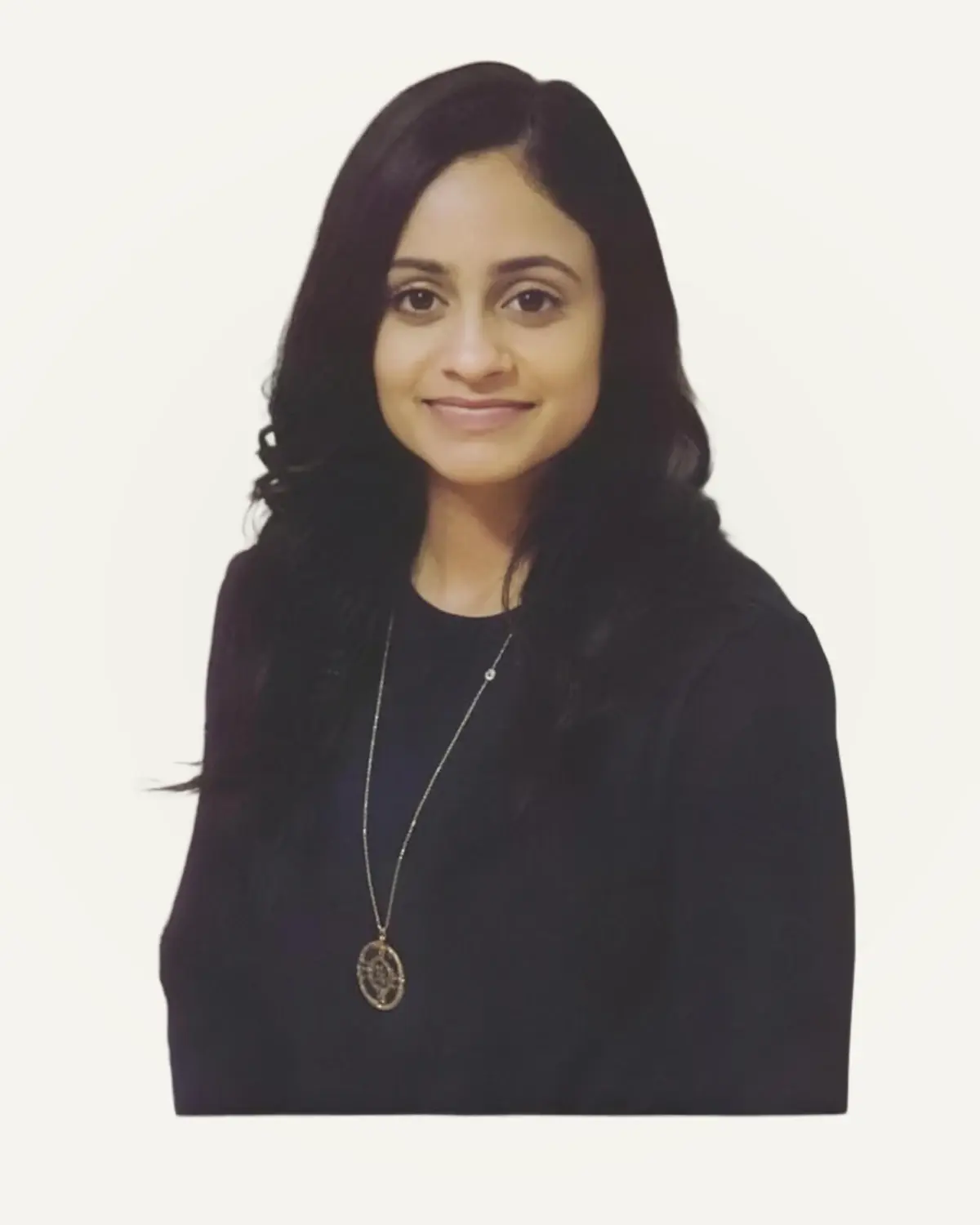
About Aayesha Ahmed
Aayesha Ahmed brings an unusually integrated perspective to her psychotherapy practice, one shaped by more than eight years working directly with children and families in educational settings, alongside formal graduate training in counselling. Before she was a therapist, she was in classrooms, running early-learning programs, and doing the daily systemic work of noticing what a family, a school, and a community were doing to shape the young people in front of her. That work left her with a very specific clinical skill: the ability to see how someone's current struggles connect back to earlier chapters, family patterns, and cultural context, without ever reducing the person to their history.
That background is why Aayesha's therapy feels different from a strictly protocol-based practice. She doesn't just work with the presenting concern, she works with the whole systemic picture. Clients navigating perinatal transitions, adults grappling with the ways their upbringing is now showing up in their parenting, first-generation professionals holding cultural expectations they didn't choose, Aayesha brings a lens that recognizes those forces without collapsing everything into them.
Clinical Philosophy
Aayesha holds two ideas together that many clinicians don't:
Culture and identity matter clinically, and evidence-based treatment matters clinically, and neither can substitute for the other. She's explicit with clients that CBT, EFT, and mindfulness are the evidence-based structure of her practice; and she's equally explicit that those structures need to be applied with genuine cultural competence and lived awareness of what clients are actually navigating. Neither a generic CBT protocol nor a "culturally warm" but structureless conversation is what she offers. What she offers is both.
Therapy should reflect the client's values, not the therapist's. In perinatal care, in sex therapy, in her work with racial identity, Aayesha's role is to help clients get clearer on what they actually want, not to install a set of "right" answers. That commitment shows up in how she works: many sessions include her explicitly asking what a good outcome would look like for you, and building the treatment around your answer.
Clinical Approach
Aayesha's therapeutic approach is grounded in three evidence-based frameworks, integrated flexibly:
- Cognitive Behavioural Therapy (CBT), identifying and reshaping unhelpful thought patterns and behaviours that maintain distress
- Emotionally Focused Therapy (EFT), working with emotional experience and attachment patterns, particularly in relational contexts and around parenting
- Mindfulness-based approaches, building present-moment awareness and self-compassion as foundations for durable change
The specific combination depends on each client's goals, cultural background, and the nature of what's brought them in. Aayesha is transparent about her clinical reasoning, she'll tell you what she's using and why, so the work never feels opaque.
Areas of Expertise
Perinatal Mental Health. The transition to parenthood, from pregnancy through the postpartum period, brings profound psychological change. Aayesha supports clients navigating prenatal anxiety, postpartum depression, birth trauma, identity shifts, and the relational recalibration that new parenthood requires. She's deeply familiar with the evidence base for perinatal mental health (which is bigger and better than most clients realize), and with the ways cultural expectations around motherhood and parenthood shape whether people even name what they're going through. Her clients often say that being able to talk with someone who takes both the biology and the cultural texture seriously is what made the work feel possible.
Sex Therapy. Aayesha provides affirming, evidence-informed support for adults navigating sexual concerns, including low desire, pain, intimacy difficulties following health events or trauma, questions of sexual identity, and the specific issues that come up in long-term partnerships. She works with heterosexual and LGBTQ+ clients, single and partnered, cis and trans. She approaches this work with openness and clinical rigour, and with a firm commitment to each client's autonomy over the goals of the work.
Trauma and Parenting. Becoming a parent can surface one's own unresolved experiences from childhood, sometimes in ways that were completely dormant until the first child arrived. Aayesha works with parents who want to understand and interrupt intergenerational trauma patterns, to parent in a way that reflects their values rather than only their history. This work uses attachment-informed and trauma-informed approaches, and often takes some pressure off the parent-client to already know how to be different, the point is to learn, not to have already known.
Racial Identity and Cultural Stress. Aayesha holds a particular commitment to clients navigating the psychological dimensions of racialized experience, including identity questions, the stress of navigating predominantly white spaces, the specific pressure of being the first-in-family in professional or academic contexts, and the impact of discrimination and racial trauma on mental health. She approaches this work with cultural humility and professional competence, and she is explicit that treating these experiences as clinically significant is not political, it's clinically indicated.
Women's Issues. Aayesha works with women navigating a broad range of concerns, from perimenopausal transitions and the psychological impact of chronic reproductive health conditions, to workplace dynamics and identity questions. She recognizes how often women's presentations get medicalized without being clinically understood.
Anxiety and ADHD. Aayesha works with adults managing generalized anxiety, social anxiety, and adult ADHD. Her ADHD work is particularly attentive to how ADHD often shows up in women, as internalized failure, chronic overwhelm, and lifelong shame that has been interpreted as personality rather than neurology.
Grief and Life Transitions. Aayesha supports clients navigating grief in the full range of forms it takes, bereavement, ambiguous loss, the grief of leaving a career or a relationship or a version of yourself. She holds that grief is not a problem to be solved, but a process that benefits from being witnessed.
What a First Session Looks Like
Sessions with Aayesha are conversational and paced. In your first session, she'll want to understand what brought you in, the whole picture, not just the presenting complaint. She'll ask about your history, your current supports, and the specific texture of what's not working. She's genuinely warm without being performative.
She'll also be honest with you if she thinks another clinician on the team or elsewhere might be a better fit for what you're navigating. Referring appropriately is part of her practice, she'd rather you find the right care than force a fit that isn't right.
Background and Education
Aayesha holds a Master of Arts (MA) and is a Registered Early Childhood Educator (RECE) in Ontario. She is registered with the College of Registered Psychotherapists of Ontario (CRPO) as a Registered Psychotherapist (Qualifying), practising under the clinical supervision of a senior TMHC therapist. The "Qualifying" designation reflects that she is completing the supervised practice hours required for full registration, a stage of practice that comes with active supervision by a senior clinician, not less experience with clients.
Her eight-plus years in educational and family-support settings, working with children from diverse cultural backgrounds and their families, inform her systemic perspective and her sensitivity to the many contexts that shape mental health.
Working with Aayesha
Aayesha sees adults across Ontario, both in person at the clinic's Yonge Street location in North York and virtually. She offers a complimentary 15-minute consultation for all new clients, a chance to talk through what you're navigating and see whether working together makes sense.